

Fold documents. Stuff envelopes. Protect sensitive information.
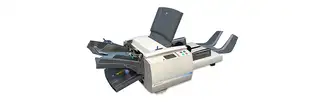
Folders
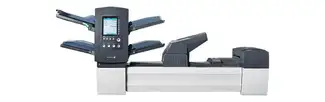
Folder Inserters
Get the results your business wants.
Why Pitney Bowes?
Innovations to help you streamline and grow your business



Folder inserter and envelope stuffing machines: frequently asked questions
What is the difference between a paper folder and a folder inserter?
A paper folder only folds documents — it creases sheets into a chosen fold type ready for enveloping by hand or by another machine. A folder inserter does more: it folds the documents and automatically inserts them into envelopes, then seals them. Pitney Bowes offers both — the OfficeRight folders for folding alone, and the Relay range for full fold-insert-seal mail assembly.
What does a folder inserter do?
A folder inserter automates mail assembly. It draws sheets from one or more feeders, folds them, collates them with any inserts, places them into an envelope and seals it — producing finished, ready-to-mail items without manual handling. Higher models can verify that the right pages go into the right envelope down to individual page level.
Which is right for my business, a folder or a folder inserter?
If you mainly need documents folded — for example for outer-fold mailers or booklets — a paper folder like the OfficeRight DF800 or DF900 is the simpler, faster choice. If you send letters, invoices or statements that need folding and enveloping, a folder inserter from the Relay range automates the whole process and suits higher or more regulated mail volumes.
Why automate folding and inserting instead of doing it by hand?
Manual folding and stuffing is slow, error-prone and ties up staff time, and incorrect mail piece contents can create privacy and compliance risks. Automating it speeds up assembly, removes the errors that come with hand handling, reduces waste, and frees staff for higher-value work — while features like double-feed detection and page-level verification protect accuracy.