

Take the effort out of opening documents.
Get the results your business wants.
Why Pitney Bowes?
Innovations to help you streamline and grow your business



Mailroom letter openers FAQ
What is a letter opener (mailroom machine)?
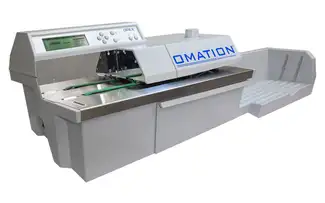
A letter opener is a mailroom machine that automatically opens incoming envelopes at speed, so post can be processed and distributed faster than opening by hand. Business letter openers feed envelopes through and make a precise cut along one edge, handling anything from a few hundred to tens of thousands of envelopes per hour depending on the model.
How does an automatic letter opener work?
Envelopes are fed into the machine, which makes a thin incision along the top or side edge using a rotary cutting or milling mechanism, then ejects the opened envelope ready for its contents to be removed. Because only a narrow strip is removed — rather than tearing the envelope — there's minimal waste and no off-cuts to cause paper jams. Higher-end models adjust automatically to mixed envelope sizes and thicknesses, so post doesn't need pre-sorting.
Will a letter opener damage the contents of the envelope?
No. Letter openers are designed to cut only a narrow strip from the very edge of the envelope, typically leaving the contents untouched. The cut depth is calibrated to the envelope rather than its contents, which is why these machines are used for opening cheques, legal documents and other valuable mail without damaging what's inside.
What's the difference between a letter opener and a mail extraction desk?
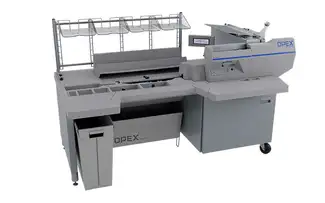
A letter opener opens the envelope; the operator then removes and sorts the contents. A mail extraction desk, such as the OPEX Model 72, goes a step further — it automatically feeds and opens each envelope and presents the contents to the operator for immediate sorting, combining opening and extraction into one ergonomic workflow. Extraction desks suit higher-volume operations where speed from delivery to distribution matters most.
How fast can a business letter opener process mail?
Speed varies widely by model. Entry-level desktop openers handle a few hundred envelopes per minute, while high-volume production machines reach tens of thousands per hour. The right speed depends on your daily mail volume — a small office has very different needs from a legal, financial services or public sector mailroom processing large daily inbound post.
Why do businesses use automatic letter openers instead of opening mail by hand?
Automatic letter openers save time, reduce repetitive manual handling, and process large volumes consistently without the errors or fatigue that come with opening by hand. Because the cut is clean and waste is minimal, mail can move into sorting and distribution faster — getting time-sensitive documents to the right people sooner, which matters most in high-volume mailrooms.