

DL & Omation Series Letter Openers
Make short work of opening all types of mail with helpful counters, ergonomic workflows and operator comfort, to ensure you are getting the most for your business. Our range of letter openers makes an incision across the top of each envelope, which means there is no waste produced and removes the risk of paper jams from envelope off cuts – so if you’re in a hurry you won’t be delayed.




Process large volumes of mail with greater speed, efficiency and ease.
Our clients are the centre of Pitney Bowes.
We are proud to be trusted by these leading companies…



Meet the Product Range
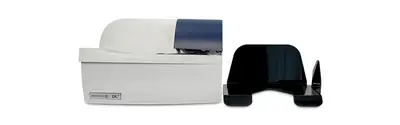
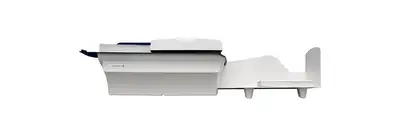
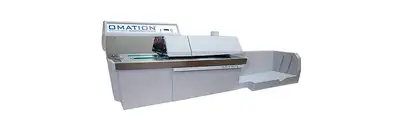
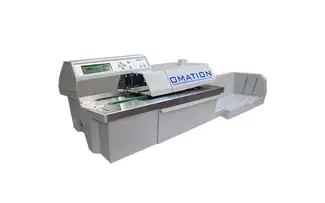
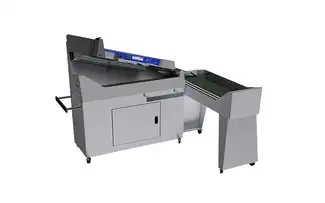
Compare the DL & Omation letter opener range
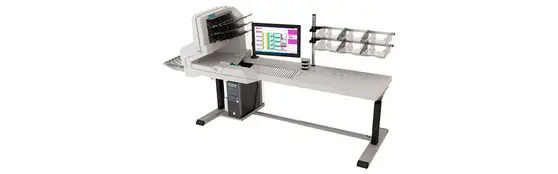
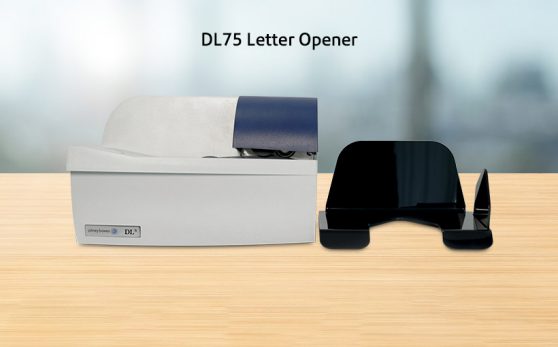
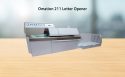
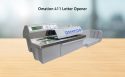
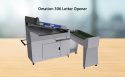
All models open envelopes with a clean edge cut for minimal waste and no off-cut jams. They differ mainly in speed, automation and the extra features built for higher-volume and audit-led mailrooms. Use the table to find the right fit for your daily mail volume.
| DL75 Entry desktop | DL250 Auto-feed desktop | Omation DL211 Mixed-mail milling | Omation DL411 Milling + audit trail | Omation 306 High-volume production | |
|---|---|---|---|---|---|
| Opening speed | Up to 300 / min | Up to 420 / min | Up to 400 / min | Up to 400 / min | Up to 40,000 / hour |
| Cutting method | Slicing, enclosed cutter | Slicing, 0.8–4mm | Edge-to-edge milling | Edge-to-edge milling | Milling, multiple cut depths |
| Envelope feed | Manual feed | Automatic self-feed | Mixed sizes & thicknesses | Mixed sizes & thicknesses | Auto feed, up to 400-envelope hopper |
| Max thickness | — | Up to 10mm (to B4) | Mixed thicknesses | Mixed thicknesses | Up to 13mm |
| Audit-trail printing | — | — | — | Integrated inkjet: date, time & sequence | Optional inkjet, up to 4 lines |
| Output sorting | — | — | — | — | Dual output, programmable by size |
| Best for | Low-volume offices | Steady office volume, no pre-sorting | Mixed daily inbound mail | Traceable / compliance mail | High-volume production mailrooms |
Speeds and specifications are maximums and vary with envelope size, thickness and configuration. Full details for each model are available in the individual product brochures.
DL & Omation letter openers: frequently asked questions
How does an automatic letter opener work?
Envelopes are fed into the machine, which makes a thin cut along one edge using either a slicing blade or a milling cutter, then ejects the opened envelope ready for the contents to be removed. Because only a narrow strip is taken from the edge — rather than tearing the envelope — there is minimal waste and no off-cuts to cause paper jams. The DL and Omation models cut from less than a millimetre to a few millimetres from the edge.
What is the difference between slicing and milling letter openers?
A slicing opener, like the DL75 and DL250, makes a clean single cut along the envelope edge and suits standard envelopes. A milling opener, used by the Omation DL211, DL411 and 306, removes a fine chip edge-to-edge, which opens envelopes completely and handles mixed sizes and thicknesses in the same run without pre-sorting. Milling is generally preferred for higher-volume mailrooms processing varied inbound mail.
Will a letter opener damage the contents of the envelope?
No. These openers are designed to remove only a narrow strip from the very edge of the envelope, leaving the contents untouched. The Omation milling cutter, for example, removes a chip as small as around 0.25mm and offers multiple cut depths plus a no-cut position, which minimises the risk of damaging cheques, documents or other valuable mail inside.
How fast can the DL and Omation letter openers process mail?
Speed depends on the model. The desktop DL75 opens up to 300 envelopes per minute and the DL250 up to 420 per minute. The Omation DL211 and DL411 open up to around 400 per minute, while the production-grade Omation 306 reaches up to 40,000 envelopes per hour. The right speed depends on your daily mail volume.
What is an audit trail on a letter opener, and which models offer it?
An audit trail prints information onto each opened envelope — such as the date, time, a job or operator ID and a unique sequence number — so inbound mail can be traced and verified. This matters for regulated work like legal, financial services and remittance processing. The Omation DL411 has an integrated inkjet printer for this, and the Omation 306 offers it as an option with up to four lines of print.
Can these letter openers handle mixed envelope sizes and thicknesses?
The higher models are built for it. The DL250 self-feeds and adjusts automatically up to B4 envelopes and 10mm thick with no pre-sorting. The Omation DL211 and DL411 handle mixed sizes and thicknesses in the same run, and the Omation 306 opens envelopes up to 13mm thick and can sort output to two locations by size. Entry-level desktop opening suits more uniform, lower-volume mail.
You might also like these products.